Integrating a strategic stress management program isn't just another employee benefit. It's a core business function for driving productivity, building a resilient workforce, and developing more effective leaders. This is about moving from passive perks to active mental fitness training that delivers a measurable return.
TL;DR
- Stress management is a strategic tool for building mental fitness, not just a wellness perk.
- Key advantages include measurable gains in productivity, enhanced employee resilience, and stronger leadership.
- Ignoring stress leads to tangible costs like burnout, high turnover, and decreased innovation.
- The most effective programs are science-based, consistently practiced, and championed by leadership.
What Is a Strategic Stress Management Program?
A strategic stress management program uses science-based techniques to build mental fitness and resilience, helping employees perform effectively under pressure. It’s more than a generic wellness perk.
While a gym membership is a valuable benefit, it’s a passive offering. Stress management training, on the other hand, is an active skill that directly impacts how the brain responds to challenges. Think of it as performance enhancement training. Elite athletes train their minds with the same discipline they apply to their bodies.
This approach focuses on techniques grounded in neuroplasticity—the brain's ability to rewire itself. By consistently practicing skills like mindfulness, emotional regulation, and focused breathing, employees can change their default responses to stressors. It’s not about eliminating stress; it’s about building the capacity to handle it constructively.
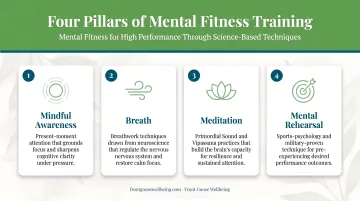
At Front Goose Wellbeing, we frame this as strength-training for the mind, focusing on four pillars:
- Developing mindful awareness to stay present and focused.
- Using breathwork to regulate the nervous system.
- Practicing meditation to enhance clarity and calm.
- Applying mental rehearsal to visualize successful outcomes—a technique used by top athletes and military operators.
Key Business Advantages of Integrating Stress Management
The true value of stress management isn't just in employee satisfaction surveys; it's visible in measurable business outcomes that directly impact the bottom line.
Increased Productivity and Cognitive Performance
Chronic stress floods the brain with cortisol, a hormone that impairs executive functions like focus, memory, and decision-making. When your team is constantly in a state of high alert, their ability to do deep, creative work plummets.
Stress management techniques directly counteract this. Practices like focused attention training strengthen the prefrontal cortex, the brain's command center, leading to improved concentration, fewer errors, and faster problem-solving.
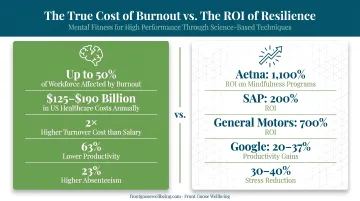
The result is higher-quality output and a greater capacity for innovation. For instance, company-reported data from Aetna’s mindfulness program showed a productivity gain of 62 minutes per week per employee.
KPIs Impacted:
- Project completion rates
- Error reduction rates
- Time-to-decision
- Innovation output
Enhanced Employee Resilience and Talent Retention
Unmanaged stress is the number one driver of burnout, which leads to disengagement and costly turnover. According to a 2022 Gallup report, employees with poor mental health take nearly 12 unplanned absence days per year, compared to just 2.5 for their colleagues, costing U.S. businesses $47.6 billion annually in lost productivity.
Resilience training gives employees the tools to navigate high-pressure situations, bounce back from setbacks, and maintain performance without burning out. This has a direct financial benefit. Replacing a salaried employee can cost anywhere from 50% to 200% of their annual salary.
By investing in resilience, you’re not just supporting your people—you’re protecting your balance sheet and building a more adaptable workforce.
KPIs Impacted:
- Employee turnover rate
- Absenteeism
- Employee engagement scores (e.g., eNPS)
- Healthcare claims costs
Stronger Leadership and Improved Team Dynamics
A leader's stress level is contagious. When a manager is overwhelmed, their anxiety ripples through the entire team, eroding psychological safety and hindering performance. This isn't just a feeling; it's neuroscience. An unregulated leader can trigger a "threat" response in their team's brains, shutting down creativity and collaboration.
Stress management training equips leaders with emotional regulation skills. It enables them to communicate clearly, make rational decisions under pressure, and foster a supportive environment. Leaders who model calm and composure inspire confidence and reduce team-wide anxiety.
According to the American Psychological Association, a culture of psychological safety is a key driver of innovation and teamwork. Emotionally intelligent leaders build more engaged, collaborative, and innovative teams.
KPIs Impacted:
- 360-degree feedback scores
- Team productivity metrics
- Employee satisfaction with management
What Happens When Stress Management Is Ignored
Ignoring strategic stress management isn't a neutral decision. It comes with a tangible cost of inaction that damages several critical areas of your business.
According to research from leading universities, workplace stressors account for 5% to 8% of annual U.S. healthcare costs. But the damage goes far beyond insurance premiums. Ignoring systemic stress creates predictable problems:
- Fosters a culture of burnout where top performers disengage, productivity plummets, and they eventually leave for healthier environments.
- Leads to higher error rates as the cognitive load from chronic stress degrades work quality and invites poor strategic decisions.
- Drives turnover and absenteeism, forcing you to spend resources on hiring and covering for absent employees instead of on growth.
- Creates a "firefighting" mentality where teams get stuck managing crises instead of driving proactive initiatives and outpacing competitors.
How to Get the Most Value from Your Stress Management Program
Simply launching a program isn't enough. Success depends on thoughtful implementation and a commitment to making it part of the company culture.
Ensure Leadership Participation. For mental fitness to become a cultural norm, leaders must model the behavior. When executives openly prioritize these practices, it gives the entire organization permission to do the same.
Prioritize Consistent Practice. A one-time workshop creates a temporary spike in awareness but fails to build lasting skills. Frame the program as ongoing "mental fitness training," as multi-month cohort programs are often more effective than single events.
Partner with a Credible Expert. Look for a provider who blends corporate leadership experience with certified wellness credentials. This ensures the training is practical and tailored to your unique business challenges. For example, our founder's background as a 25-year HR executive and a Board Certified Coach helps align wellness goals with real-world corporate needs.
Conclusion
Integrating stress management into your wellness program transforms it from a simple perk into a powerful driver of business performance. It’s an investment in the engine of your company: your people.
By equipping your teams with tools to build mental fitness, you create a more productive, resilient, and innovative organization. The benefits contribute directly to a healthier bottom line and a sustainable culture of high performance.
It's time to move beyond passive perks and start actively training for mental resilience. Contact Front Goose Wellbeing to learn how our science-based programs can give your team a competitive edge.
Frequently Asked Questions
What is the difference between a general wellness program and a stress management program?
General wellness is often broad, covering passive perks like nutrition apps or gym discounts. A strategic stress management program actively teaches science-based skills to improve the brain's response to pressure, enhancing performance and resilience.
How can we measure the ROI of investing in stress management?
Key metrics to track include reductions in employee turnover, absenteeism, and healthcare costs. You can also measure direct productivity gains, improved project completion rates, and higher employee engagement scores.
What are some simple, science-backed stress management techniques for the workplace?
Effective techniques include structured micro-breaks to reset the nervous system, box breathing to calm anxiety, and short, focused mindfulness exercises to improve concentration between tasks.
How can leaders model and encourage effective stress management?
Leaders can openly discuss the challenges of stress, take visible breaks, protect work-life boundaries for their teams, and actively champion the company’s mental health resources and training programs.
Does stress management training actually work for high-performing teams?
Yes, it is especially effective for high-performers. It provides the mental tools needed to sustain focus, maintain high-quality decision-making, and prevent burnout under the intense pressure that comes with their roles.
What is the first step to integrate stress management into our existing wellness program?
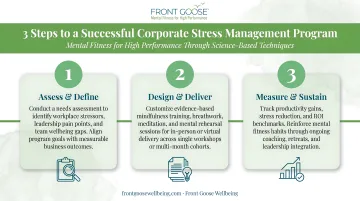
Start by surveying employees to understand their specific stressors. An expert partner can then help you design a targeted pilot program that addresses those needs and establishes clear success metrics.