The old approach of offering superficial perks is no longer enough. The new frontier of sustainable performance isn't about managing stress—it's about building mental fitness. This is the proactive development of resilience, focus, and emotional regulation, turning your workforce into a team that can thrive under pressure, not just survive it.
This guide provides a complete playbook for 2026. We’ll explore the undeniable business case for managing employee stress, how to spot the early warning signs, and science-backed strategies to build a culture of mental fitness that drives real results.
TL;DR: Your Guide to a Stress-Resilient Workplace
- View stress management as a business strategy that boosts productivity and retention.
- Spot stress indicators early, from individual disengagement to high team turnover.
- Use proven strategies like mindfulness, genuine flexibility, and clear role definitions.
- Ensure leaders model healthy behaviors and create psychological safety for program success.
- Track success using business KPIs (engagement, retention), not just participation metrics.
Why Managing Employee Stress is a Business Imperative in 2026
Viewing employee well-being as a "soft" HR initiative is an outdated and costly mistake. Unchecked stress is a silent drain on your organization's financial health, performance, and competitive edge.
The Financial Impact of Burnout
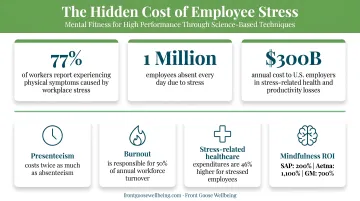
The numbers are clear: a stressed workforce is an expensive one. Chronic stress directly contributes to higher rates of absenteeism, turnover, and healthcare spending.
- Absenteeism: According to Gallup, employees reporting fair or poor mental health take nearly 12 unplanned absence days per year, compared to just 2.5 days for other workers. This lost productivity costs the U.S. economy an estimated $47.6 billion annually.
- Turnover: Replacing an employee is expensive, and stress is a primary driver of attrition. The American Psychological Association (APA) found that employees with low psychological safety—a key factor in stress—were significantly more likely to be looking for a new job (41%) than their peers (29%).
- Healthcare Costs: The link between stress and physical health is well-documented. Research cited by NIOSH shows that healthcare expenditures are nearly 50% higher for workers who report high levels of stress.
The Performance and Innovation Drain
Beyond direct costs, a high-stress environment systematically dismantles your company's ability to innovate. Stress impairs the brain's prefrontal cortex, which governs executive functions like complex problem-solving, creative thinking, and collaboration.
When your team is running on empty, they default to survival mode. Strategic thinking is replaced by reactive decision-making. Collaboration suffers as irritability and conflict rise. This cognitive drain makes it nearly impossible to generate the new ideas and agile solutions needed to stay competitive.
The War for Talent
The competition for talent is fierce, and potential hires are prioritizing employers who actively support mental health. A 2024 survey from Deloitte found that work-life balance is a top factor for employees, with 40% of Gen Zs and 35% of millennials feeling stressed most of the time.
Companies that fail to offer a supportive environment will not only struggle to attract new hires but will lose the battle for the next generation of leaders.
Recognizing the Silent Burnout Indicators in Your Organization
Burnout doesn’t happen overnight. It’s a slow erosion of engagement and energy that often shows up in subtle behavioral shifts long before it appears in turnover statistics. Astute leaders learn to spot these indicators at every level.
Individual Warning Signs
Watch for uncharacteristic changes in your high performers and dedicated team members. Key signs include:
- A pattern of disengagement, such as speaking less in meetings, contributing fewer ideas, or showing a general lack of enthusiasm.
- Increased irritability or negativity, including a shorter fuse or more frequent disagreements with colleagues.
- A decline in work quality, marked by uncharacteristic errors, missed details, or difficulty concentrating.
- Social withdrawal from team activities, such as opting out of lunches or avoiding non-essential conversations.
Team-Level Indicators
When stress becomes a team-wide issue, it manifests in collective behaviors that disrupt workflow and culture.
- Rising interpersonal conflict, including more frequent arguments, finger-pointing, or a tangible sense of tension.
- An increase in sick days, especially a noticeable uptick around project deadlines or stressful periods.
- Consistently missed deadlines, creating a pattern of projects falling behind schedule even with manageable workloads.
- A palpable lack of energy, such as a quiet office, a lack of celebratory moments, or a feeling of just going through the motions.
Organizational Red Flags
At the highest level, systemic stress shows up in your company’s data. Leaders should monitor these key metrics:
- Increased employee turnover, especially a rising voluntary attrition rate in specific departments or teams.
- Higher utilization of your EAP, as an increase in employees accessing the program can signal widespread issues.
- Negative feedback in pulse surveys, paying close attention to comments about workload, management, and work-life balance.
- Recurring themes in exit interviews, where departing employees honestly flag issues related to burnout, management, or culture.
6 Science-Backed Strategies to Build a Stress-Resilient Workplace
Tackling workplace stress requires more than just a yoga class. It demands a strategic, multi-faceted approach grounded in proven science. Here are six strategies to build a foundation of mental fitness and resilience.
1. Redefine Work-Life Balance with True Flexibility
The conversation around work-life balance has shifted toward integration. Employees need autonomy to manage their professional and personal lives. Policies like flexible hours, compressed workweeks, and remote/hybrid options are no longer just perks; they are essential tools for stress management. The APA's 2024 Work in America survey found that workers not in their preferred location were far more likely to feel stressed and emotionally exhausted.
2. Implement Science-Based Mindfulness and Mental Fitness Training
Generic meditation apps are a start, but real change comes from structured mental fitness training. This involves teaching employees proactive skills to manage pressure. The science of neuroplasticity shows that with practice, we can rewire our brains for greater focus and resilience. A Harvard-led study found that an eight-week mindfulness program created measurable changes in brain regions associated with memory, empathy, and stress.
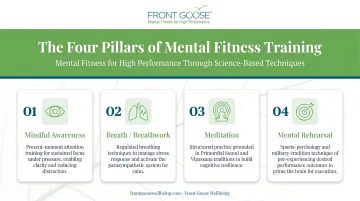
The most effective training programs are built on core pillars that equip employees with practical tools:
- Mindful Awareness: Training attention to be present and notice thoughts without reactivity.
- Breathwork: Using simple breathing techniques to regulate the nervous system in real-time.
- Meditation: Structured practice to strengthen neural pathways for focus and calm.
- Mental Rehearsal: A technique from elite sports to pre-experience success in high-stakes situations.
3. Promote "Active Recovery" and Strategic Breaks
The "always-on" culture is a direct path to burnout. Research consistently shows that regular, short breaks improve focus and task performance. Encourage a culture of active recovery by implementing practices like:
- "No-meeting" blocks for deep, uninterrupted work.
- Walking meetings to combine light exercise with collaboration.
- Encouraging employees to step away from their desks for lunch.
4. Make Mental Health Resources Accessible and Stigma-Free
Provide a robust EAP, but don't stop there. Modern support includes access to therapy apps, wellness stipends, and mental health first-aid training for managers. Most importantly, leadership must actively talk about these resources to normalize their use. The APA found that 39% of workers worry that telling an employer about a mental health condition could negatively affect them. Open conversation from the top is the most powerful tool for breaking that stigma.
5. Engineer a Culture of Recognition and Psychological Safety
A lack of appreciation is a significant stressor. Simple, consistent recognition—from peer-to-peer shoutouts to celebrating small wins—can make a huge difference.
This builds a foundation for psychological safety, which Harvard’s Amy Edmondson defines as a shared belief that a team is safe for interpersonal risk-taking. When employees feel safe to speak up or admit a mistake without fear of punishment, stress levels plummet.
6. Clarify Roles and Manage Workloads Proactively
Ambiguity and overload are two of the biggest drivers of workplace stress. Managers must be equipped to:
- Set clear expectations for every role and project.
- Conduct regular workload reviews to ensure tasks are manageable and equitably distributed.
- Prioritize tasks transparently, so everyone understands what is most important and what can wait.
The Leader’s Playbook: Championing a Culture of Mental Fitness
Initiatives are only as effective as the culture that supports them, and culture is set at the top. Leaders and managers are the most critical agents of change in building a mentally fit organization.
Lead by Example: Model Healthy Boundaries
Your employees are watching you. If you send emails at 10 PM, they'll feel pressured to respond. If you never take a vacation, they'll think twice about taking theirs. Leaders must visibly and authentically model healthy behaviors. This means taking your full vacation time, logging off at a reasonable hour, and even openly discussing your own strategies for managing stress.
Equip Managers to Be Frontline Supporters
Managers have the most direct and consistent impact on an employee's daily stress levels, yet most are never trained to support their team's well-being. Investing in this area has a clear return; studies show that even brief training, like a 4-hour manager mental health program, can significantly reduce work-related sickness absence.
Equip your managers to spot the early signs of burnout, have empathetic one-on-one conversations, and confidently guide team members to the right resources.
Create the Conditions for Psychological Safety
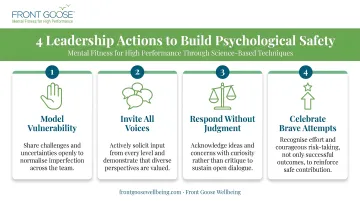
Psychological safety is essential for a low-stress, high-performance team. Leaders foster this environment by:
- Encouraging open feedback and listening without defensiveness.
- Responding constructively when team members raise problems or admit mistakes.
- Promoting healthy conflict around ideas, not people.
- Admitting your own mistakes to show that vulnerability is a strength and a sign of confidence.
Partner with Experts to Drive Real Change
Building a true mental fitness program requires specialized expertise. While HR can manage the logistics, a dedicated partner can provide the science-backed content and credibility needed for success. Look for organizations that combine deep corporate experience with accredited certifications.
For example, an effective partner like Front Goose Wellbeing is often led by someone who understands corporate pressures firsthand, such as a former HR executive with experience at companies like GE and Kohler. This background, when combined with credentials like being a Board Certified Health & Wellness Coach, ensures training is practical, science-based, and resonates with leadership.
Communicate the "Why" Relentlessly
Finally, leaders must consistently communicate the company's commitment to well-being. Frame these initiatives not as a reaction to a problem, but as a core component of your high-performance strategy. When employees understand that their mental fitness is directly linked to the organization's success, these programs are seen as an essential investment, not a temporary perk.
Measuring the ROI of Your Employee Wellness Initiatives
To secure ongoing executive buy-in, you must demonstrate the business impact of your wellness initiatives. This means moving beyond vanity metrics like participation rates. Tracking how many people attended a workshop is not enough; you need to connect your efforts to bottom-line results.
Identify Key Performance Indicators (KPIs)
Focus on business outcomes you can track before and after implementing your strategies. Key metrics include:
- Retention and Turnover: A measurable decrease in voluntary attrition.
- Absenteeism: A reduction in unplanned sick days.
- Engagement Scores: Improved scores on pulse surveys, especially for metrics related to stress and support.
- Employee Net Promoter Score (eNPS): A higher likelihood of employees recommending your company as a great place to work.
Connect Wellness to Performance
Look for correlations between wellness engagement and team performance. Over time, you should be able to see if the teams with higher participation in mental fitness training also demonstrate higher productivity, better project outcomes, or improved customer satisfaction scores.
While every organization is different, investing in targeted wellness programs can yield significant returns. For example, a foundational 2010 meta-analysis from the RAND Corporation found that wellness programs returned an average of $2.73 in absenteeism savings for every dollar spent.
By focusing on clear business outcomes, you can build a powerful case for sustained investment in your people.
Frequently Asked Questions
What are the most common causes of workplace stress?
The most common causes include heavy workloads, a lack of control or autonomy, unclear job expectations, and poor management support. Interpersonal conflict and a fear of job insecurity are also significant contributors.
How can managers best support their team's mental well-being?
Managers can provide the best support through regular, genuine check-ins, modeling healthy work-life boundaries, and clearly defining priorities to prevent overload. They should also be trained to recognize signs of stress and guide employees to company resources.
What is the difference between a wellness program and mental fitness training?
Wellness programs are often broad, covering topics like nutrition and physical exercise. Mental fitness training is more specific, focusing on proactively building skills like resilience, focus, and emotional regulation to enhance performance under pressure.
How can you ensure wellness initiatives are inclusive for a diverse and remote workforce?
Inclusivity requires offering a variety of digital resources, providing flexible stipends that employees can use for their specific needs, and regularly soliciting feedback to cater to different schedules, cultural backgrounds, and personal preferences.
What is psychological safety and why is it important for stress reduction?
Psychological safety is a shared belief that it's safe to take interpersonal risks, like voicing concerns or admitting mistakes without fear of blame. This reduces stress by creating a culture of trust where employees feel supported and can ask for help.